
Yes, products from the “365 by Whole Foods Market” brand are generally worth buying. In my opinion, they are a good choice for everyday consumption—especially if you are looking for items with simple ingredient lists, organic options, and good value for money.

However, there is a caveat: not all 365 products are organic, not all are equally healthy, and not all are cheaper than those from competing brands.
What makes the 365 brand a good choice?
“365 by Whole Foods Market” is the private-label brand of the American retail chain Whole Foods Market.
Its product range includes over 3,500 items, such as dairy products, grains, oils, nuts, frozen vegetables and fruits, canned goods, and much more.
Key advantages include:
- Strict ingredient standards. Whole Foods prohibits the use of over 300 ingredients in its food products—including high-fructose corn syrup, certain synthetic colors, and specific sweeteners.
- A wide selection of organic products. The chain offers nearly 1,000 certified organic items under the 365 brand.
- Additional requirements for suppliers. For example, the brand’s chocolate bars and baking chocolate carry Fair Trade certification.
- Stance on GMOs. Whole Foods states that the entire 365 product line is developed without the use of bioengineered ingredients. However, this does not necessarily mean that every individual product holds an independent “Non-GMO” certification. These are significant advantages, though they are largely supported by the company’s own standards and claims rather than by independent laboratory testing of all its products.
Which 365 Products Do I Recommend Trying?
Frozen vegetables and berries: These are a top pick for me, especially varieties with no added sugar, salt, or sauces. The 365 line includes certified organic berries and vegetables, making them convenient options for everyday meals, smoothies, and healthy snacks.
Salted and unsalted butter: The 365 lineup includes regular and organic butter options, such as Organic Salted Butter and Unsalted Butter, both visible on store shelves. These are practical choices for baking, cooking, and everyday use. I would compare prices with national brands, particularly when buying several packages.
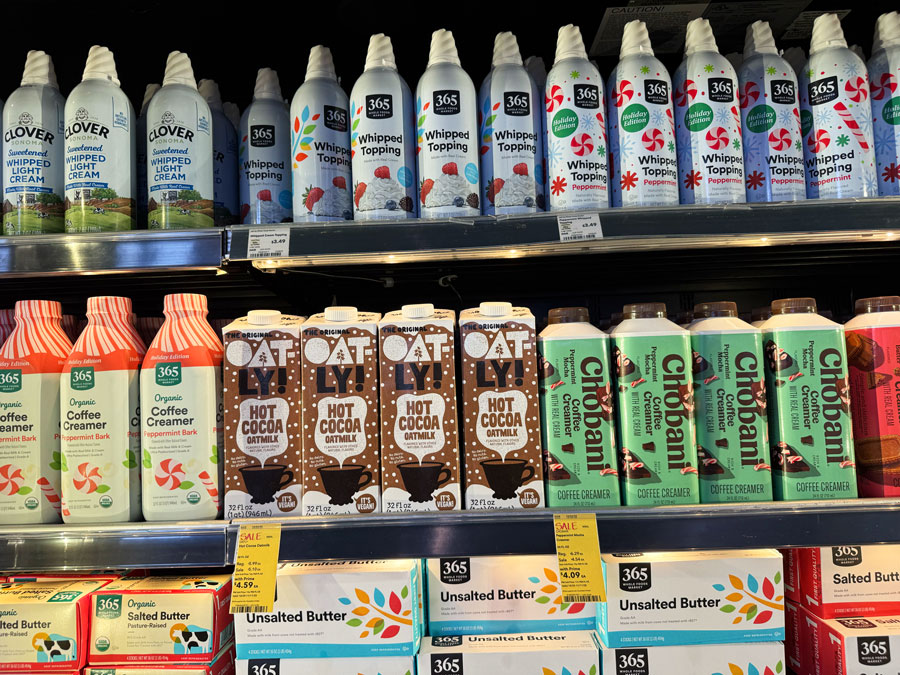
Whipped toppings and coffee creamers: The 365 selection includes regular whipped toppings alongside seasonal flavors such as Peppermint Whipped Topping and Organic Peppermint Bark Coffee Creamer. These holiday-inspired products can be fun additions to coffee, hot chocolate, or homemade desserts. However, flavored creamers and whipped toppings are best enjoyed in moderation, especially when they contain added sugars.
Beans, chickpeas, and grains: These are solid pantry staples. The range includes Organic Black Beans and Unsalted Black Beans. For canned products, I would generally choose versions with no added salt and compare prices with other store brands.
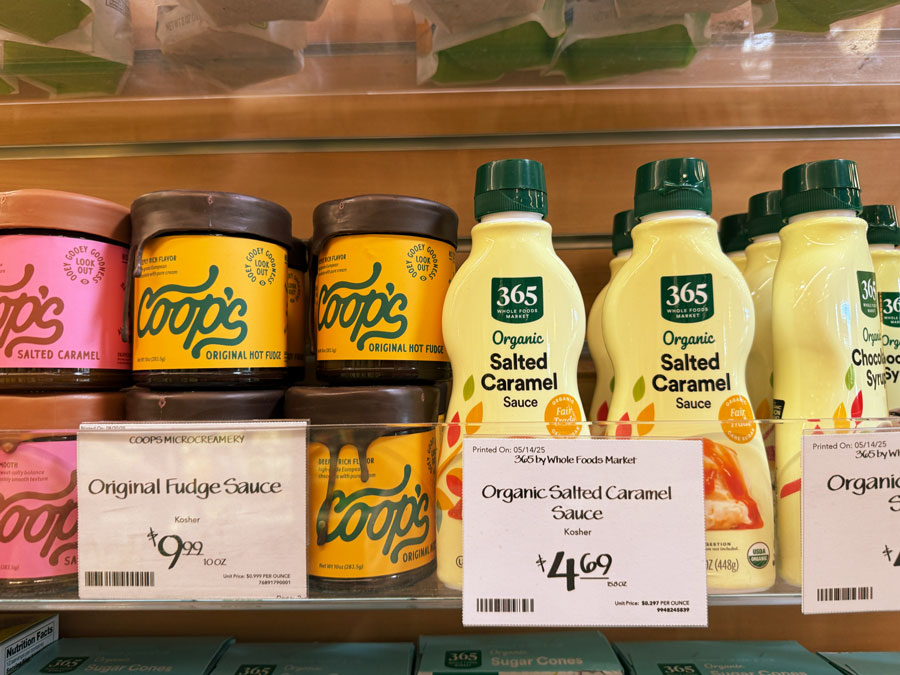
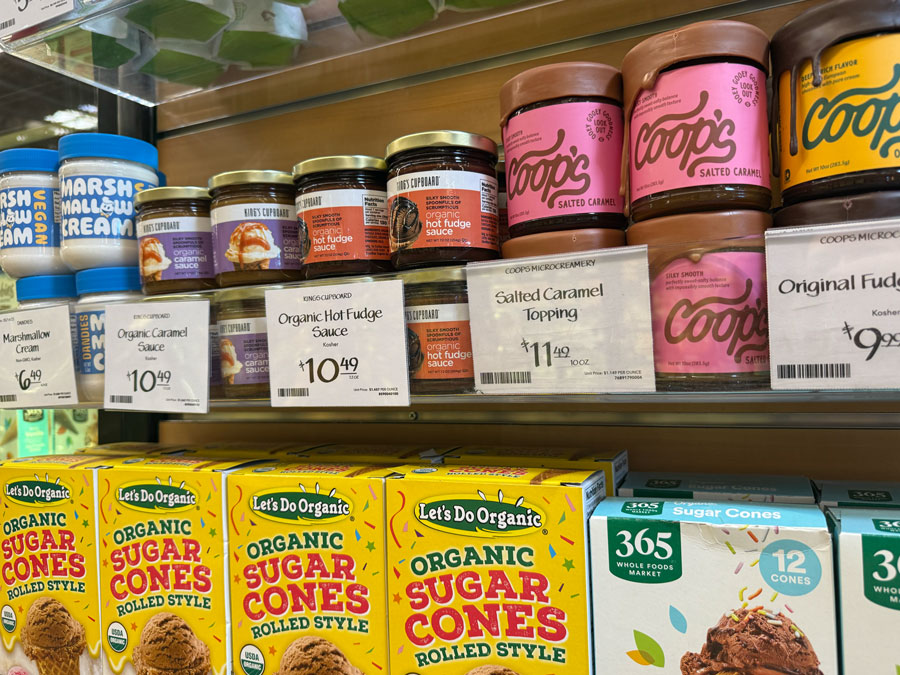
Organic caramel sauce and ice cream cones: For dessert lovers, 365 offers Organic Salted Caramel Sauce and Organic Sugar Cones. The caramel sauce can complement ice cream, pancakes, and other homemade treats, while the cones are convenient for serving ice cream at home. Although these products carry organic labels, they remain sweet treats rather than everyday health foods.
Plain Greek yogurt: Worth checking out. In a 2023 blind taste test by Consumer Reports, Whole Foods’ organic Greek yogurt was found to be the closest in taste to Chobani among the store brands evaluated.
Peanut and almond butter: I would choose versions with no added sugar or unnecessary ingredients. It’s important to check the actual ingredient list rather than relying solely on the “Organic” label.
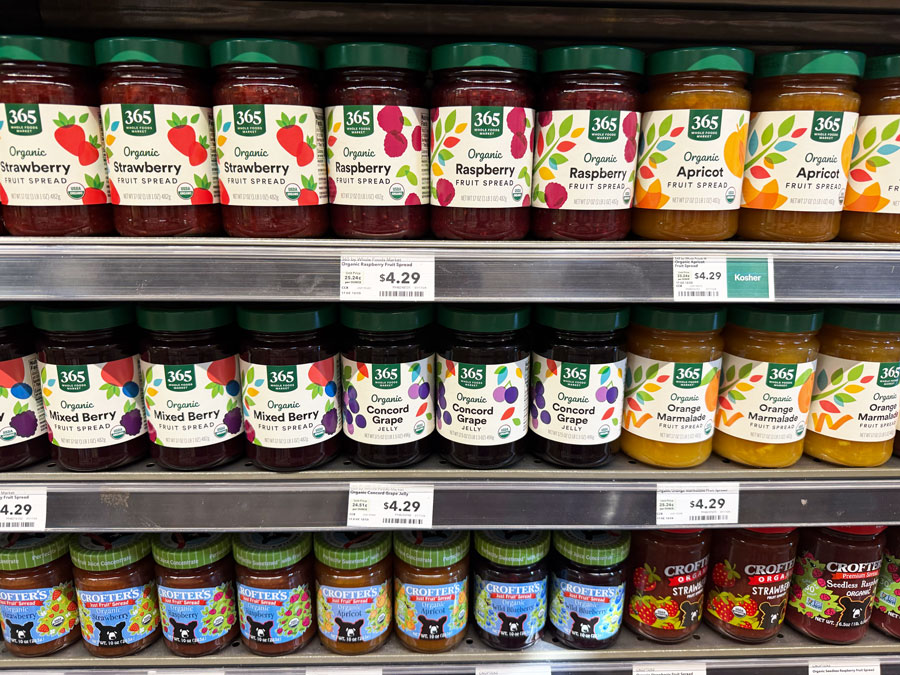
Organic fruit spreads: One of the more interesting discoveries was the variety of flavors, including Strawberry, Raspberry, Apricot, Mixed Berry, Concord Grape, and Orange Marmalade. These USDA Organic fruit spreads are worth considering for toast, pancakes, and desserts. However, organic doesn’t necessarily mean low in sugar, so checking the nutrition label is important.
My takeaway: I would prioritize 365’s frozen produce, pantry staples, natural nut butters, and plain dairy products for regular shopping. The organic fruit spreads, seasonal creamers, and dessert toppings are also worth exploring, particularly if you enjoy discovering new flavors. Just remember that ingredient quality, nutritional value, and price should matter more than the organic label alone.
What Should You Look Out For?
Just because a product carries the USDA Organic certification, it does not automatically mean it has a superior nutritional profile. The certification regulates production methods and the use of organic ingredients.
I would be especially careful when checking items like breakfast cereals, cookies, snacks, pre-made sauces, and desserts. The FDA recommends comparing the amounts of added sugar, sodium, and saturated fat, as well as the fiber content. There are also questions regarding taste; for instance, some organic dressings—such as the Ranch from Whole Foods—received lower ratings from tasters than certain cheaper alternatives.
My Conclusion
I would certainly consider the “365” brand for regular grocery shopping—primarily for staples like grains, legumes, natural dairy products, frozen vegetables, berries, and nut butters.
However, I wouldn’t pay extra just for the brand name. It is always worth comparing the ingredients, package weight, and unit price.
What interests you most: whether “365” products are truly high-quality and safe in terms of their ingredients, or how they compare to other common American brands—such as Walmart’s “Great Value” or Costco’s “Kirkland Signature”? We could certainly take a closer look and make a detailed comparison.
365 vs. Kirkland Signature vs. Great Value: Which Is Better?
When comparing private-label grocery brands, 365 by Whole Foods Market, Kirkland Signature from Costco, and Great Value from Walmart offer different advantages.
- 365 by Whole Foods Market: Focuses on ingredient standards, organic options, and responsible sourcing. Whole Foods prohibits more than 300 food ingredients, including certain artificial sweeteners and preservatives. It’s a good choice for shoppers who prioritize ingredient selection.
- Kirkland Signature (Costco): Emphasizes quality and value, often through larger packages. Costco develops products to compete with major national brands, making Kirkland attractive for households that regularly buy in bulk.
- Great Value (Walmart): Focuses on affordability and everyday essentials. Its extensive selection and Walmart’s Every Day Low Price strategy make it a practical option for budget-conscious shoppers.

Which Should You Choose?
Choose 365 for its ingredient standards, Kirkland Signature for bulk shopping, and Great Value for everyday affordability.
However, no single brand is automatically better in every category. Compare ingredients, nutritional information, package sizes, and unit prices before purchasing. Organic certification or a higher price doesn’t necessarily mean a product is more nutritious.